Quality Department Structure and Core Criteria
The Helzer Machine LLC Quality Department is founded on the establishment and maintenance of a robust Quality Management System (QMS). This system is structured around four primary pillars: planning, assurance, control, and continuous improvement. The quality department is guided by essential principles, including customer focus, leadership engagement, a process-driven approach, evidence-based decision-making, and effective risk management. Through these principles, the quality department ensures the integrity and reliability of all products and services delivered.
Key Pillars and Components:
Quality Planning: The quality department defines clear quality objectives, establishes relevant policies, and sets specific requirements for all products and services.
Quality Assurance (QA): Systematic actions are implemented to ensure all processes consistently meet established quality standards.
Quality Control (QC): Products are thoroughly tested and inspected to detect defects and verify that all specifications are met.
Continuous Improvement: The quality department utilizes data-driven methods, including Corrective and Preventive Actions (CAPA), to foster ongoing enhancements in quality processes and outcomes.
Key Performance Indicators:
The effectiveness of the quality department is evaluated using specific metrics, including product defect rates, customer satisfaction levels, audit results, and overall process efficiency. The quality department is committed to delivering parts correctly on the first attempt, emphasizing a proactive approach to quality.
Inspection Department Capacity:
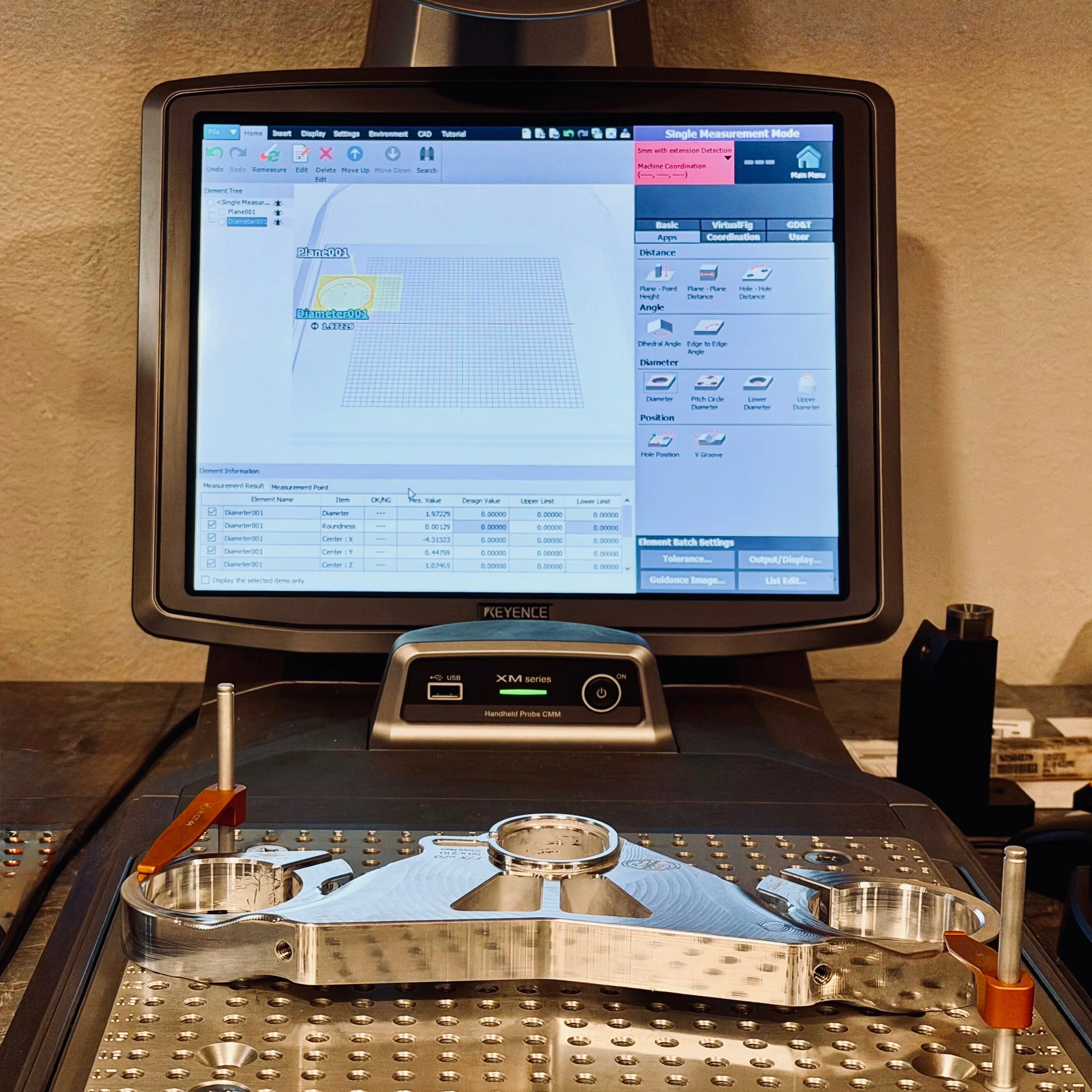
The Helzer Machine LLC inspection department is equipped with advanced measurement and testing tools to support all quality assurance activities.
Available equipment includes:
Keyence 3D Optical CMM VL-800
Keyence IM Series CMM
Keyence XM Series Handheld CMM
Optical Comparators
Digimar 817 CLM
Tesa Micro-Hite 3D CMM
All other standard measuring tools required for comprehensive inspection activities.
Core Operational Criteria:
Regulatory & Standard Compliance: Adherence to industry standards – such as ISO 9001 – ensures leadership involvement, employee engagement, and a systematic process approach.
Document Control: Management of all documentation, including standard operating procedures (SOP), is maintained to guarantee consistency and traceability.
Risk Management: The quality department identifies, prevents, and resolves risks that could impact product quality.
Supplier Quality Management: Incoming materials are audited and managed to maintain the highest standards of supplier quality.
Data Management & Reporting: Data is leveraged to measure performance, identify trends, and support informed decision-making.
Training & Competence: Tracking of employee training ensures that all staff members maintain the technical competence required for their roles.